Choose Your Starting Approach: Portable, Off-Grid or Rooftop
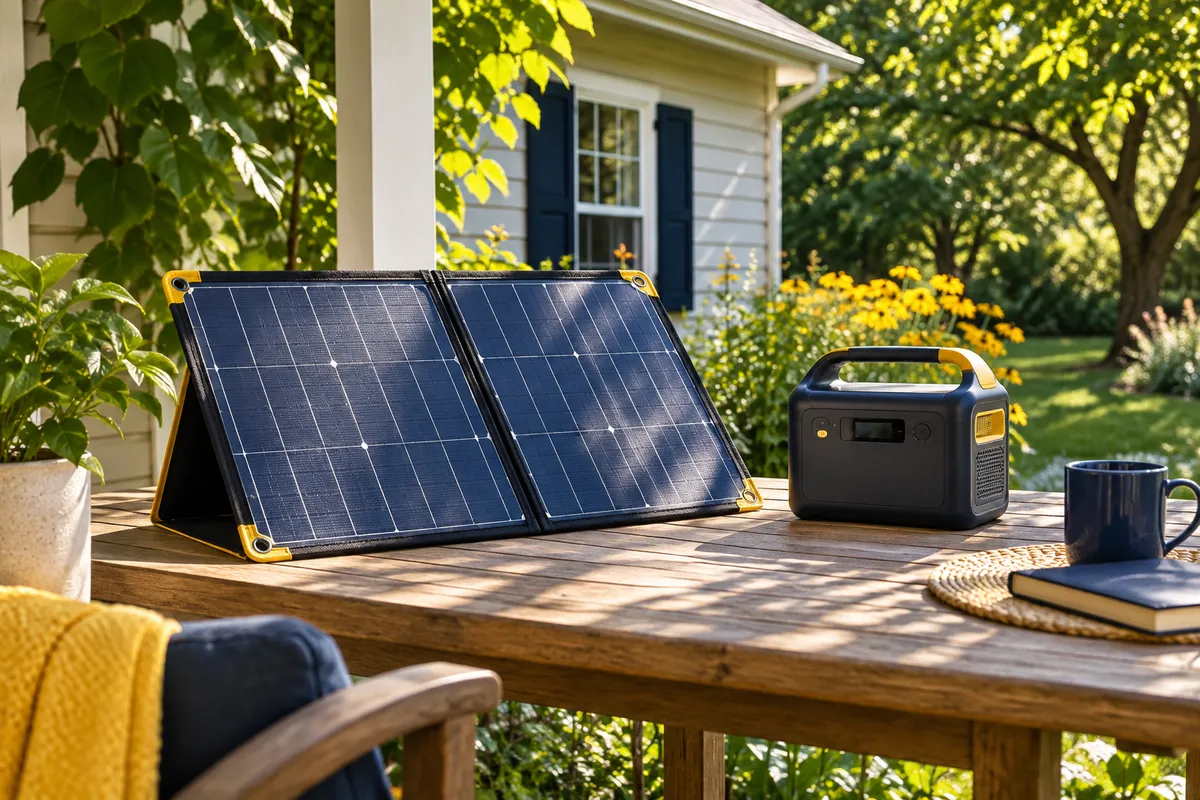
There are three common starting points. Pick the one that matches your goal from Chapter 1.
| Approach | Best for | Questions to answer first |
|---|---|---|
| Portable power station + folding panels | Learning, camping, outages, selected devices | What are its exact input and output limits? Where can it safely sit? How long will it really run your list? |
| Off-grid system | A shed, cabin or separate workspace | Will it keep up in winter and during a cloudy week? Who designs and installs it? |
| Grid-connected rooftop | Lowering electric bills | Roof, shade, utility rules, permits and installed cost? |
Why most beginners start portable
A power station with matching panels is plug-and-play: no wiring, no permits, and you can take it with you. It's the best way to learn how much energy you really use before spending thousands. For our example office, it's the first option worth investigating.
Before buying panels for any power station, check that the panel's voltage and current fit the station's solar input range. Cold weather raises panel voltage, so leave some headroom.
Powering a shed or backyard office
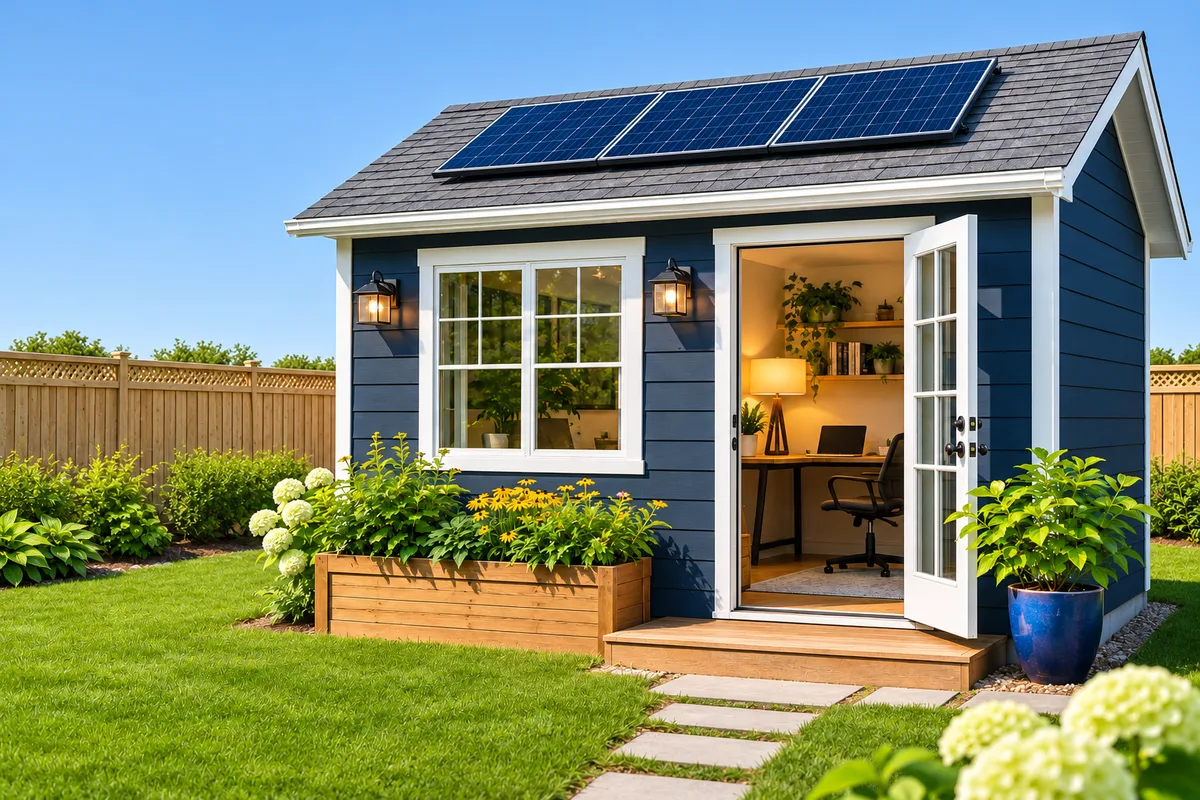
A shed is a great second project. Plan for your worst season, not your best: short winter days can cut production in half or more. Anything permanently mounted or wired into a structure should be designed and installed by a qualified pro, with permits where required.