Solar Equipment Explained: Panels, Controllers, Batteries and Inverters
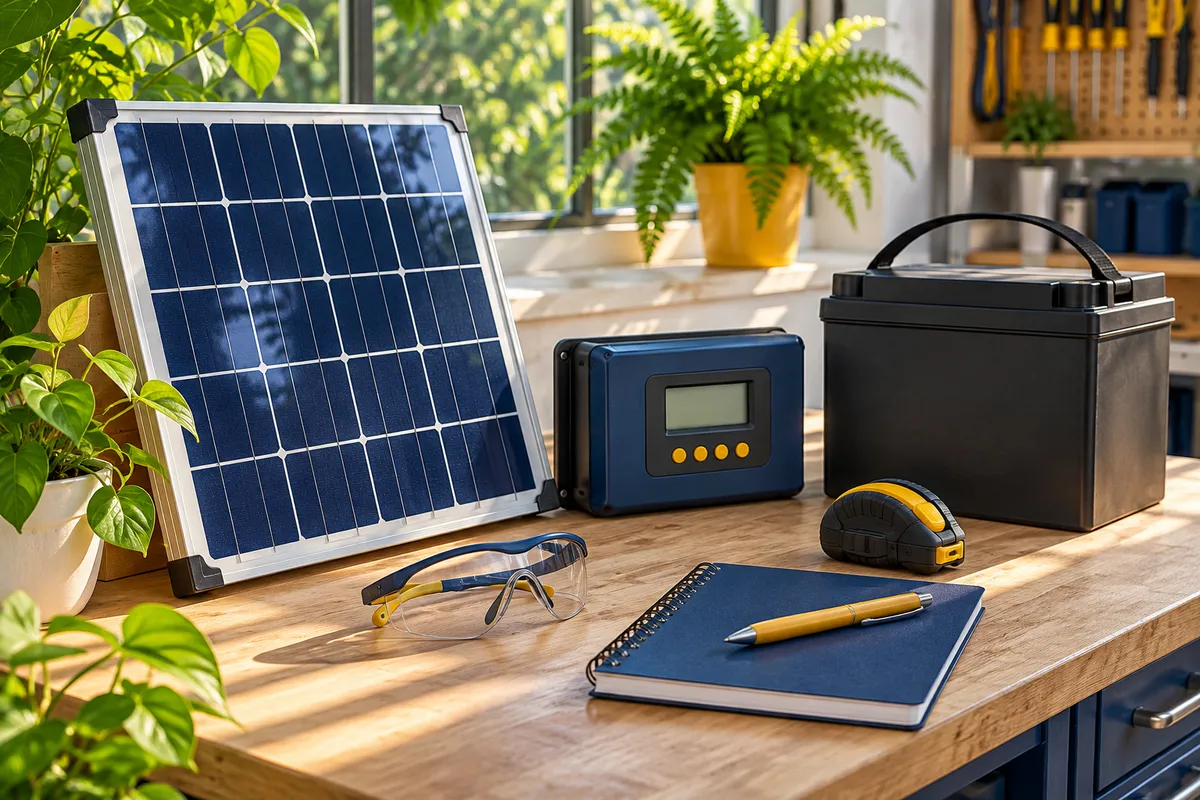
Every solar setup, from a camping kit to a cabin, uses the same four building blocks. Here's what each one does.
☀️ Solar panels
Turn sunlight into DC electricity. A panel's watt rating is its output in ideal sun, not what it makes all day.
🎛️ Charge controller
Manages the flow from panels into the battery so it charges safely. Often built into other gear.
🔋 Battery
Stores the energy. Compare usable capacity, temperature limits, warranty and expansion options.
🔌 Inverter
Turns the battery's DC into the AC power most household devices use. Check its continuous and surge ratings.
How the energy flows
This is a concept picture, not a wiring diagram. Real systems also need proper fuses, disconnects and grounding.
What's a “solar generator”?
It's a marketing name for a portable power station (battery + charge controller + inverter in one box) sold with panels. It's the easiest way for beginners to start, because the hard parts are already matched and packaged together. Just remember the battery stores electricity; it doesn't create it.
Mounting, cables, fuses and connections are part of the project too, not afterthoughts. And a plug that fits doesn't prove two pieces are compatible. Always match voltages and limits from the manuals.